


CBC Test Price In Delhi
Compare Prices Across Top Labs
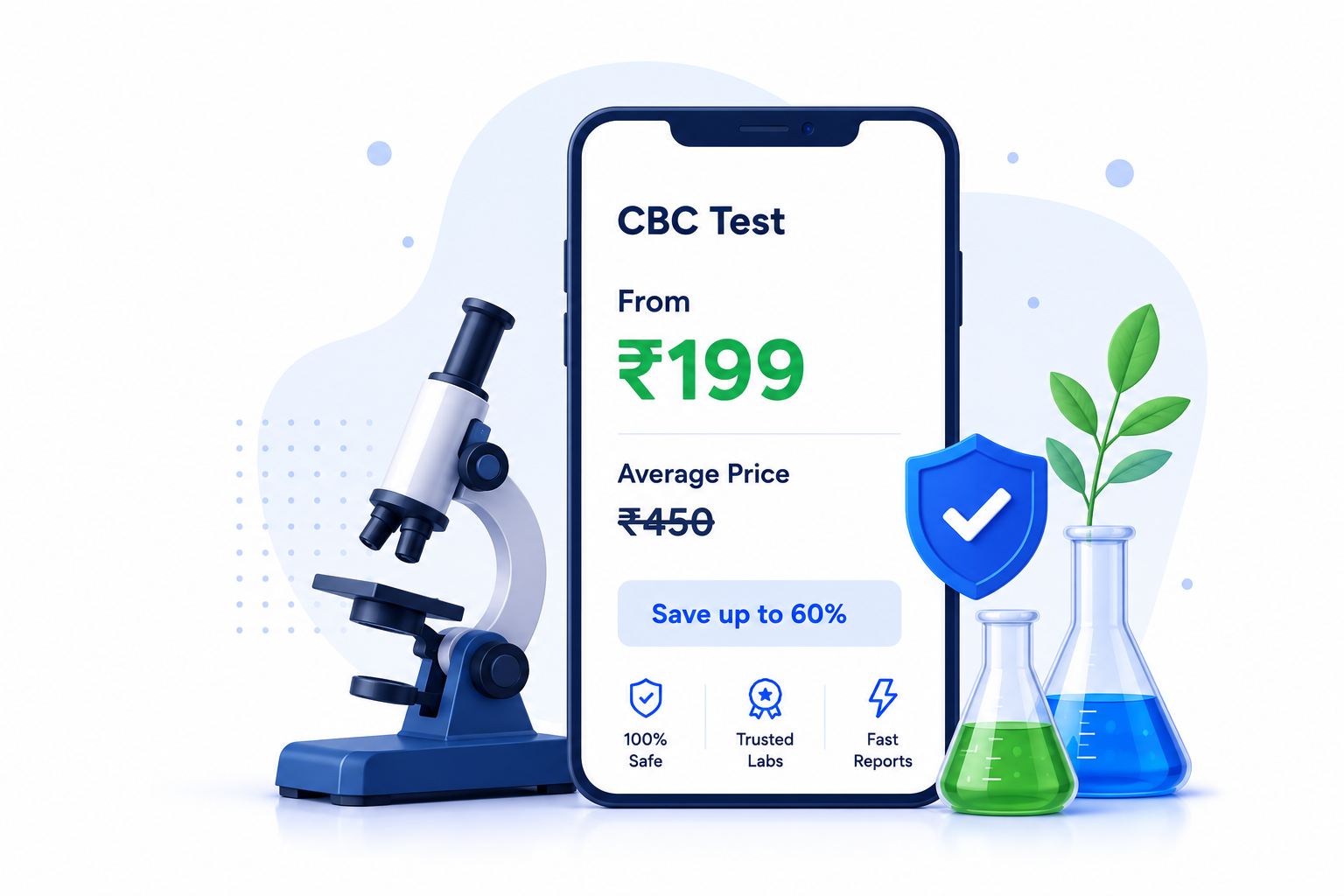
Compare CBC test prices from trusted NABL-accredited labs in Delhi. Book home sample collection, compare report time and save up to 60%.
- Starting from
₹199
5000+ Tests
Compared
Trusted Labs
Pan India
Lowest Price
Guarantee
100% Safe and Secure
Confidential
CBC Test Price in Delhi – Lab Comparison
| Lab Name | Price(sort) | Book | Report Time | Home Collection | Parameters | NABL |
|---|---|---|---|---|---|---|
| HOD | Cheapest ₹199 | Book Test → | same day | ✅ Yes | 22 | ✅ Yes |
| Manipal TRUtest | ₹210 | Book Test → | within 24 hours | ✅ Yes | - | ✅ Yes |
| Qris Health | ₹239 | Book Test → | within 24 hours | ✅ Yes | 26 | ✅ Yes |
| Neuberg Diagnostics | ₹280 | Book Test → | within 4 hours | ✅ Yes (in most areas) | 20 | ✅ Yes |
| BigOHealth | ₹297 | Book Test → | within 24 hours | ✅ Yes | - | ✅ Yes |
| Redcliffe Lab | ₹299 | Book Test → | 11 hours | ✅ Yes | 26 | ✅ Yes |
| Meditest | ₹299 | Book Test → | within 15 hours | ✅ Yes | 24 | ✅ Yes |
| Core Lab | ₹299 | Book Test → | same day | ✅ Yes | 24 | ✅ Yes |
| City X-Ray & Clinic | ₹300 | Book Test → | within 24 hours | ✅ Yes | 25 | ✅ Yes |
| Ganesh Diagnostic | ₹300 | Book Test → | within 24 hours | ✅ Yes | - | ✅ Yes |
| MetroPolis | ₹300 | Book Test → | within 4 hours | ✅ Yes | - | ✅ Yes |
| HR Diagnostics | ₹300 | Book Test → | 4 to 6 hours | ✅ Yes | 26 | ✅ Yes |
| Aarthi Scans & Labs | ₹300 | Book Test → | within 6 hours | ✅ Yes | - | ✅ Yes |
| Healthians | ₹353 | Book Test → | within 10 hours | ✅ Yes | 24 | ✅ Yes |
| 1 Mg (Platform) | ₹319 | Book Test → | within 12 hours | ✅ Yes | 21 | N/A |
| Nirmaya PathLabs | ₹325 | Book Test → | same day | ✅ Yes | - | ✅ Yes |
| Thyrocare | ₹330 | Book Test → | within 13 hours | ✅ Yes | 28 | ✅ Yes |
| Dr Lal Path Labs | ₹340 | Book Test → | same day | ✅ Yes | 24 | ✅ Yes |
| PharmaEasy (Platform) | ₹349 | Book Test → | within 7 hours | ✅ Yes | 24 | N/A |
| Max Lab | ₹350 | Book Test → | within 24 hours | ✅ Yes | - | ✅ Yes |
| Agilus Diagnostic(SRL) | ₹350 | Book Test → | within 24 hours | ✅ Yes | 31 | ✅ Yes |
| Orange Health Labs | ₹350 | Book Test → | within 6 hours | ✅ Yes | 24 | ✅ Yes |
| Pathkind Labs | ₹350 | Book Test → | same day | ✅ Yes | 29 | ✅ Yes |
| Mahajan Imaging and Labs | ₹360 | Book Test → | same day | ✅ Yes | - | ✅ Yes |
| Modern Diagnostic & Research Centre | ₹360 | Book Test → | same day | ✅ Yes | 30 | ✅ Yes |
| Apollo 24/7 (Platform) | ₹399 | Book Test → | within 10 hours | ✅ Yes | 30 | N/A |
| Max at Home | ₹552 | Book Test → | within 24 hours | ✅ Yes | - | ✅ Yes |
📌 Prices are sourced from official laboratory and healthcare-platform websites and updated regularly.
💰 Starts at ₹199 | 🧪 25+ Labs
🚗 Home Collection | ✅ NABL Accredited
📅 Last Updated: 19 August 2026
👆 Tap the Price header to see the lowest or highest price firstCompare Other Blood Tests
What is a CBC Test?
A CBC Test (Complete Blood Count) is a blood test that measures several important components of your blood. It is also commonly known as a CBC Blood Test or haemogram test.
A CBC provides information about:
- Red blood cells (RBCs)
- White blood cells (WBCs)
- Hemoglobin
- Hematocrit
- Platelets
- Red blood cell indices such as MCV, MCH, MCHC, and RDW
- Differential white blood cell counts, depending on the laboratory and test package
A healthcare provider may recommend a CBC to evaluate blood-cell counts, investigate symptoms such as fatigue or fever, or monitor certain medical conditions and treatments.
The CBC is a commonly used blood test, but its results should be interpreted together with your symptoms, medical history, examination findings, and the laboratory’s reference ranges.
Why is a CBC Test Done?
A CBC Test (Complete Blood Count) is commonly performed to evaluate the number and characteristics of different blood cells. It can provide useful information when investigating symptoms, monitoring health conditions, or checking how the body is responding to certain treatments.
A healthcare provider may recommend a CBC Blood Test to:
- Evaluate symptoms such as fatigue, weakness, fever, dizziness, or unexplained bruising.
- Help evaluate or monitor anemia.
- Support the evaluation of suspected infections.
- Investigate abnormal bleeding or changes in blood-cell counts.
- Monitor certain medical conditions that can affect blood cells.
- Monitor the effects of certain medicines or medical treatments.
- Provide information as part of a broader health evaluation when clinically appropriate.
A CBC does not diagnose every condition by itself. Abnormal results usually need to be interpreted together with symptoms, medical history, examination findings, and sometimes additional laboratory tests.
What Does a CBC Test Measure?
A CBC Test measures several components of the blood and provides information about the number and characteristics of different blood cells.
Red Blood Cells (RBCs)
Red blood cells carry oxygen from the lungs to tissues throughout the body. The RBC count and related indices help evaluate the size and characteristics of red blood cells.
Hemoglobin
Hemoglobin is the protein in red blood cells that carries oxygen. A low hemoglobin level can be associated with anemia, although other factors must also be considered.
Hematocrit
Hematocrit indicates the proportion of blood volume occupied by red blood cells. It is commonly reported as a percentage.
White Blood Cells (WBCs)
White blood cells are part of the immune system. The total WBC count and differential count can provide information that helps evaluate infections, inflammation, and other conditions.
Platelets
Platelets play an important role in blood clotting. Abnormally low or high platelet counts may require further evaluation.
Who Should Get a CBC Test?
A CBC Test may be recommended for people who have symptoms, clinical findings, or medical conditions that require an evaluation of their blood-cell counts.
A healthcare provider may recommend a CBC Blood Test if you:
- Have persistent fatigue, weakness, dizziness, or unusual tiredness.
- Have symptoms that may suggest anemia.
- Have a fever or suspected infection.
- Experience unexplained bruising or bleeding.
- Have symptoms or medical conditions that may affect blood-cell counts.
- Need to monitor a known medical condition or the effects of certain medicines or treatments.
- Require a CBC as part of a broader medical evaluation when clinically appropriate.
A CBC Test is not necessarily required for everyone. Your healthcare provider determines whether the test is appropriate based on your symptoms, medical history, examination findings, and other factors.
A CBC test is one of the most frequently ordered blood tests because it provides a quick overview of your general health. When interpreted along with your symptoms and medical history, it helps doctors diagnose, monitor, and manage many different medical conditions.
CBC Test Normal Range
There is no single universal CBC normal range because reference intervals can vary based on age, sex, laboratory method, and other factors. The reference range printed on your own CBC report should always be used for final interpretation.
Typical adult reference ranges may include:
| Parameter | Normal Range (Adults) |
|---|---|
| Hemoglobin (Male) | 13.5–17.5 g/dL |
| Hemoglobin (Female) | 12.0–15.5 g/dL |
| White Blood Cells | 4,000–11,000 cells/µL |
| Red Blood Cells (Male) | 4.7–6.1 million/µL |
| Red Blood Cells (Female) | 4.2–5.4 million/µL |
| Platelets | 150,000–450,000 cells/µL |
| Hematocrit (Male) | 41–53 % |
| Hematocrit (Female) | 36–46 % |
*These are general adult reference ranges, not universal diagnostic cutoffs. Individual laboratories may use different intervals. Children, pregnant women, and people with certain medical conditions may also have different reference ranges.
Important
A CBC contains multiple parameters, so there is no single number called the “CBC normal value.” Each component—such as hemoglobin, WBC count, RBC count, platelets, and hematocrit—has its own reference range.
An abnormal CBC value does not necessarily indicate a disease. Results should be interpreted together with symptoms, medical history, examination findings, and other investigations when required.
CBC Test Preparation
A CBC Test usually requires little or no special preparation.
- Fasting: Fasting is generally not required for a CBC Blood Test when it is performed alone.
- Food and water: You can usually eat and drink normally before the test unless your healthcare provider gives you different instructions.
- Medicines: Inform your healthcare provider about any medicines and supplements you take.
- Other tests: If the CBC is being performed along with other blood tests that require fasting or special preparation, follow the instructions provided for the complete set of tests.
- Medical instructions: Do not stop or change prescribed medicines unless specifically instructed by your healthcare provider.
The blood sample can generally be collected at any convenient time when no other preparation is required.
How is a CBC Test Performed?
A CBC Test is performed using a blood sample collected from a vein, usually in your arm.
- A healthcare professional cleans the skin over the selected vein.
- A small needle is inserted into the vein to collect the blood sample.
- The sample is placed in a collection tube and sent to the laboratory.
- The laboratory analyzes the sample using an automated blood-cell analyzer.
- The report provides the measured CBC parameters along with the laboratory’s reference ranges.
The blood collection generally takes only a few minutes. Most people can resume their normal activities immediately after the sample is collected.
What Do High and Low CBC Values Mean?
A CBC test measures several blood components. If one or more values are outside the normal range, it does not always indicate a serious medical condition. Understanding what high or low values may suggest can help you discuss your results with your doctor more effectively.
| CBC Parameter | High Value May Indicate | Low Value May Indicate |
|---|---|---|
| Hemoglobin | Dehydration, lung disease | Anemia, blood loss |
| White Blood Cells | Infection, inflammation | Infection, inflammation |
| Red Blood Cells | Dehydration | Anemia |
| Platelets | Inflammation, bone marrow disorders | Bleeding disorders |
| Hematocrit | Dehydration | Anemia |
CBC results should always be interpreted together with your symptoms, medical history, physical examination, and other laboratory tests. An abnormal value alone does not confirm a diagnosis.
What Conditions Can a CBC Test Help Evaluate?
A CBC Test provides information about red blood cells, white blood cells, platelets, hemoglobin, and other blood-cell parameters. Abnormal results may help a healthcare provider evaluate a range of medical conditions.
A CBC Blood Test may support the evaluation of:
- Anemia and other conditions affecting red blood cells.
- Infections, particularly when white blood cell counts are abnormal.
- Inflammatory conditions that may affect blood-cell counts.
- Bleeding or clotting-related problems, particularly when platelet counts are abnormal.
- Certain conditions affecting blood-cell production or destruction.
- The effects of certain medicines or medical treatments on blood-cell counts.
A CBC can provide useful clues, but it does not by itself diagnose most medical conditions. Additional tests may be required to determine the underlying cause of an abnormal result.
Advantages of a CBC Test
A CBC Test (Complete Blood Count) is a commonly used blood test that provides information about several important blood-cell components from a single blood sample.
Key advantages include:
- Helps evaluate red blood cells, white blood cells, hemoglobin, and platelets.
- Supports the evaluation of anemia and abnormal blood-cell counts.
- Can provide useful information when evaluating infections and inflammation.
- Helps identify abnormalities in platelet counts that may require further evaluation.
- Can be used to monitor certain medical conditions and treatments.
- Provides multiple blood parameters through a single blood sample.
- Usually requires no fasting when performed alone.
- The test is relatively quick and requires only a small blood sample.
A CBC is an important diagnostic tool, but an abnormal result does not by itself diagnose a disease. Results should be interpreted together with symptoms, medical history, examination findings, and other laboratory investigations.
Frequently Asked Questions
What is the CBC Test Price in Delhi?
The CBC Test price in Delhi typically ranges from ₹200 to ₹800, depending on the diagnostic laboratory, testing method, home sample collection, report turnaround time, and ongoing offers. CostKlaro helps you compare CBC Test prices across trusted laboratories in Delhi.
What is the Complete Blood Count Test Price?
The Complete Blood Count Test price varies between diagnostic laboratories depending on the laboratory, location, testing method, home sample collection, report turnaround time, and available offers. CostKlaro helps you compare CBC prices and laboratory details before choosing a testing provider.
What is a CBC Test?
A CBC Test (Complete Blood Count) is a blood test that measures several components of blood, including red blood cells, white blood cells, hemoglobin, hematocrit, and platelets. It is also commonly called a CBC Blood Test or haemogram test.
What is a Haemogram Test?
A Haemogram Test is another commonly used term for a Complete Blood Count (CBC). It evaluates various blood-cell parameters, although the exact parameters included can vary between laboratories and test packages.
What are the normal CBC values?
There is no single universal CBC normal value because reference ranges vary according to age, sex, laboratory methods, and other factors. Individual parameters such as hemoglobin, WBC count, RBC count, platelets, and hematocrit each have their own reference range. Always use the reference range provided on your laboratory report.
What parameters are included in a CBC Test?
A CBC commonly includes RBC count, WBC count, hemoglobin, hematocrit, platelet count, MCV, MCH, MCHC, and RDW. Some CBC packages also include a white blood cell differential. The exact parameters can vary by laboratory.
What are CBC Test charges?
CBC Test charges vary between laboratories and may depend on the location, laboratory, testing method, home sample collection, report turnaround time, and discounts. Comparing the total quoted price is useful when choosing a laboratory.
Is fasting required for a CBC Test?
Fasting is generally not required for a CBC Test when it is performed alone. However, if CBC is being performed along with other tests that require fasting, you should follow the preparation instructions provided by your healthcare provider or laboratory.
Can I get a CBC Test at home?
Yes, many diagnostic laboratories offer CBC Test home collection in selected areas. A trained phlebotomist collects the blood sample at your location and sends it to the laboratory. Availability and additional collection charges vary by laboratory and location.
How can I find a CBC Test near me?
To find a CBC Test near you, compare nearby laboratories based on price, home sample collection availability, report turnaround time, parameters included, and laboratory information. CostKlaro helps you compare these details for CBC testing in Delhi.
What does a CBC Test measure?
A CBC Test measures several blood components, including red blood cells, white blood cells, hemoglobin, hematocrit, and platelets. It may also report additional parameters such as MCV, MCH, MCHC, RDW, and white blood cell differential counts.
Can a CBC Test detect anemia?
A CBC Test can help evaluate anemia by measuring hemoglobin, hematocrit, RBC count, and red blood cell indices such as MCV. Additional tests may be required to determine the underlying cause of anemia.
Can a CBC Test detect an infection?
A CBC can provide information that supports the evaluation of an infection, particularly through the WBC count and differential. However, a CBC cannot identify the specific infection or confirm an infection by itself.
What do high or low CBC values mean?
High or low CBC values can have different meanings depending on the specific parameter affected. For example, abnormal hemoglobin, WBC, RBC, or platelet levels can have several possible causes. CBC results should be interpreted using the laboratory’s reference ranges and together with symptoms and other clinical findings.
How long does a CBC Test take?
Blood collection for a CBC Test usually takes only a few minutes. The time required to receive the report depends on the laboratory and its testing process. Some laboratories may provide results on the same day, while others may take longer.
Popular Blood Tests
Sources & References
The information on this page has been compiled from official diagnostic laboratory websites, publicly available healthcare resources, and reputable medical references. Test prices, home sample collection availability, and report delivery times may change over time. We recommend verifying the latest information directly with the diagnostic laboratory before booking your test. Costklaro aims to provide transparent, accurate, and regularly updated healthcare information to help users make informed decisions.
- Official websites of the diagnostic laboratories listed in the comparison table
- National Health Authority (NHA), Government of India
- Indian Council of Medical Research (ICMR), where applicable
- National Institutes of Health (NIH) and other internationally recognized medical references, where applicable
If your CBC results are abnormal, your doctor may recommend additional blood tests, imaging studies, or other investigations to determine the underlying cause.